Admissibility Starts at the First Move: Document Metadata, Scope, and Chain of Custody

The first move with digital evidence sets the stage for everything that follows. If metadata, scope, and chain of custody aren’t documented right away, your case risks drifting into uncertainty. With Q4 pressures mounting, acting fast and precise is the only way to keep evidence defensible under scrutiny. This guide walks you through each step to protect admissibility before any later handling complicates the record. For more insights, consider exploring rethinking the chain of custody, proof of origin, and the future of digital evidence.
Importance of the First Move
The first action in handling digital evidence can determine its future admissibility. Proper documentation is critical from the outset to ensure that evidence remains reliable and defensible.
Digital Forensics and Documentation
When you begin dealing with digital evidence, keeping detailed records is crucial. By doing so, you set a solid foundation for the entire investigative process. This involves noting every step of evidence handling, from collection to packaging. Clear documentation helps maintain the integrity of the evidence and supports its admissibility in court. These records should be accessible and clear, allowing any third party to understand the process. For guidance on maintaining a robust chain of custody, consult resources like Quizlet's guide on digital evidence admissibility.
Metadata Preservation Essentials
Protecting metadata is vital in digital forensics. Metadata provides essential details like file creation dates and modification histories, acting as a digital fingerprint. Ensuring its preservation from the start helps maintain the authenticity and reliability of the evidence. This involves using specialized tools to extract and store metadata without alteration. Regular checks are necessary to confirm its integrity throughout the investigation.
Chain of Custody from the Start
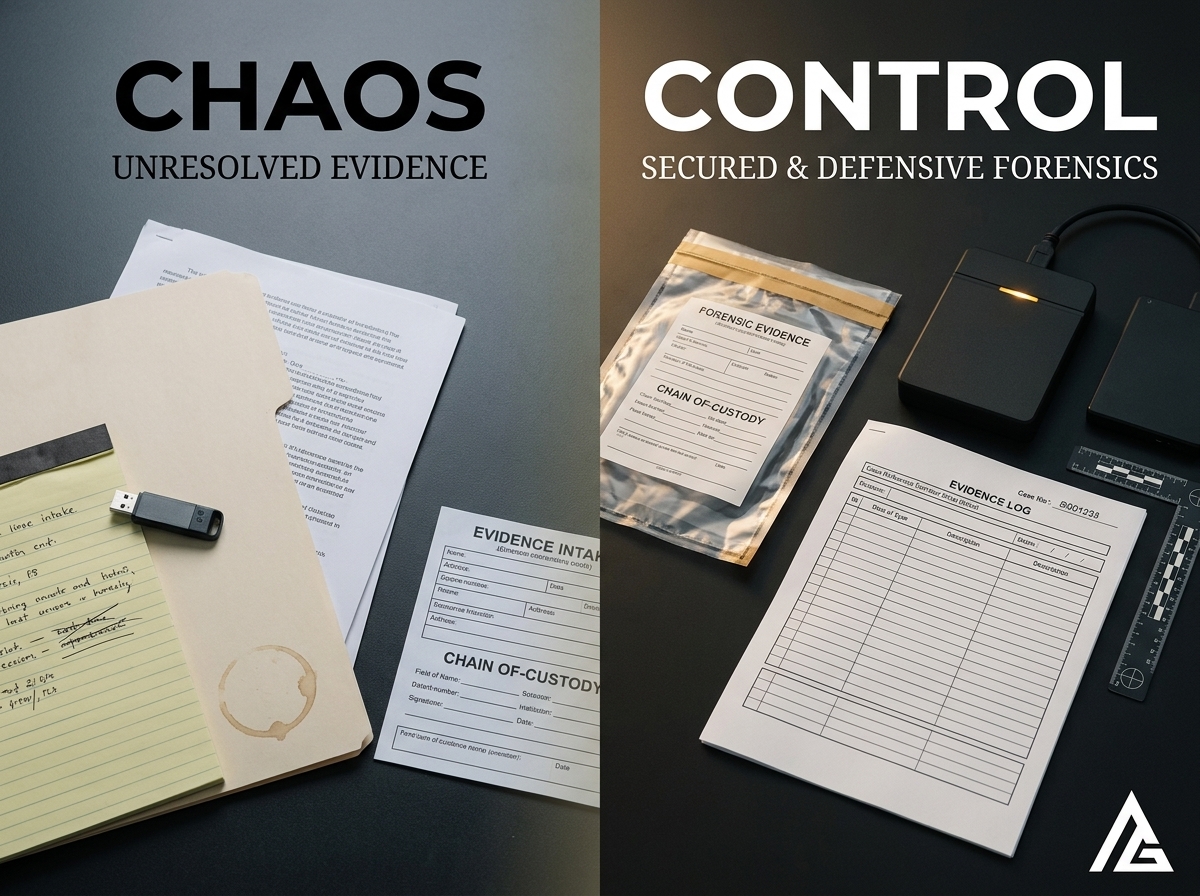
Establishing a clear chain of custody ensures that evidence is handled correctly from collection to court. This process records who accessed the evidence, when, and why, preventing unauthorized alterations. Consistent documentation shields against disputes regarding evidence integrity. Use standardized forms and logs to track evidence movements meticulously, which supports its credibility in legal proceedings. For a deeper understanding, explore chain of custody practices in digital forensics.
Step-By-Step Process
Moving from understanding to action, let's explore the step-by-step process that upholds evidence integrity and admissibility.
Forensic Imaging and Scope
Creating a forensic image is the first critical task. This involves making an exact copy of the digital evidence to work on without altering the original. During this phase, defining the scope of the collection is essential. A clear scope ensures you capture all relevant data while avoiding unnecessary information. This precision helps streamline the investigation and supports efficient evidence management.
Legal Hold and Cryptographic Hash
Implementing a legal hold prevents data destruction, ensuring all potential evidence is preserved. This step is crucial to avoid spoliation claims. Alongside, using a cryptographic hash confirms the data's authenticity. By generating a hash value, you create a unique identifier for each file, which can be used to verify its integrity throughout the investigation. Regular hash verification checks are essential to detect any unauthorized changes.
Audit Trail and Data Integrity
Maintaining an audit trail records all actions taken on the evidence, offering transparency and accountability. It includes time-stamped logs of every access and modification. This trail is crucial for validating data integrity, as it provides a comprehensive overview of the evidence's handling history. A strong audit trail supports the evidence's reliability, reinforcing its credibility in court.
Q4 Urgency and Best Practices
With Q4 approaching, the urgency to act efficiently and correctly intensifies. Adhering to best practices ensures evidence remains admissible under tight deadlines.
Rapid Response and Incident Intake
In the fast-paced world of digital forensics, a swift response is imperative. Quick and accurate incident intake prevents evidence deterioration or loss. This involves immediate action once an incident is identified, ensuring all relevant data is promptly secured and documented. Efficient response protocols minimize delays and enhance evidence reliability.
Preservation Protocol for Evidence Admissibility
Developing a robust preservation protocol protects evidence from the start. This involves outlining clear procedures for data collection, storage, and handling, ensuring consistency and reliability. Regular training on these protocols keeps teams prepared and capable of maintaining evidence integrity, even under pressure.
Expert Witness Testimony and Litigation Support
Expert witness testimony plays a crucial role in court. It involves explaining complex digital evidence clearly and credibly. To prepare, ensure all documentation is thorough and organized, supporting the expert's statements. This preparation enhances the testimony's impact, aiding in achieving favorable legal outcomes.
Frequently Asked Questions
What is the importance of documenting digital evidence from the start?
Documenting digital evidence from the outset ensures its integrity and reliability. Proper records prevent unauthorized alterations and support its admissibility in court.
How does metadata affect digital evidence reliability?
Metadata provides crucial details about digital files, such as creation dates and modifications. Preserving metadata ensures the evidence remains authentic and credible.
Why is a chain of custody necessary for digital evidence?
A chain of custody records each step of evidence handling, preventing unauthorized access and alterations. It maintains the evidence's integrity and supports its admissibility in legal proceedings.
What role does forensic imaging play in evidence handling?
Forensic imaging creates an exact copy of the digital evidence, allowing analysis without altering the original. This process ensures the evidence remains intact and reliable.
How does a legal hold contribute to data preservation?
A legal hold prevents data destruction, ensuring all potential evidence is preserved for investigation. It safeguards against spoliation claims and maintains evidence integrity.


Comments