Trust Security First, Then Build Court Defensibility: The Forensic Evidence Lifecycle

Most digital evidence falters not because it’s missing, but because its collection and preservation fall short. You face high stakes where a single misstep can unravel your entire case. By following a strict forensic methodology, you strengthen your chain of custody and build court-defensible evidence that holds firm under scrutiny. Keep reading to learn how disciplined collection, preservation, and documentation secure your position before litigation or audits begin. Learn more about the importance of digital forensics here.
Trusting Data Security
When it comes to securing digital forensics, the stakes are high. The evidence you gather is only as strong as the process you use to secure it.
Securing Digital Forensics
Ensuring that digital forensics are secure means implementing strict protocols from the start. You need to use write-blockers to prevent data alteration during evidence collection. Validate each piece of evidence with hash verification to confirm integrity. This initial step sets the tone for the rest of the process, safeguarding the evidence's reliability.
Importance of Court-Defensible Evidence
Court-defensible evidence can withstand legal challenges. It means the evidence has been collected, preserved, and documented meticulously. You need to know the Daubert standard for expert testimony to ensure that your evidence is admissible. Evidence that meets this criteria not only supports your case but stands up in court, providing a strong foundation for litigation.
Role of Cryptographic Hashing
Cryptographic hashing plays a crucial role in digital forensics. It provides an additional layer of security by generating a unique digital fingerprint for each file. This process ensures that any changes to the file are detectable, maintaining metadata integrity. By using cryptographic hashing, you enhance the credibility and defensibility of your evidence.
Building Court Defensibility
Securing evidence is just the beginning; building court defensibility involves a comprehensive strategy. This ensures that every piece of evidence is ready for legal scrutiny.
Evidence Preservation Strategies
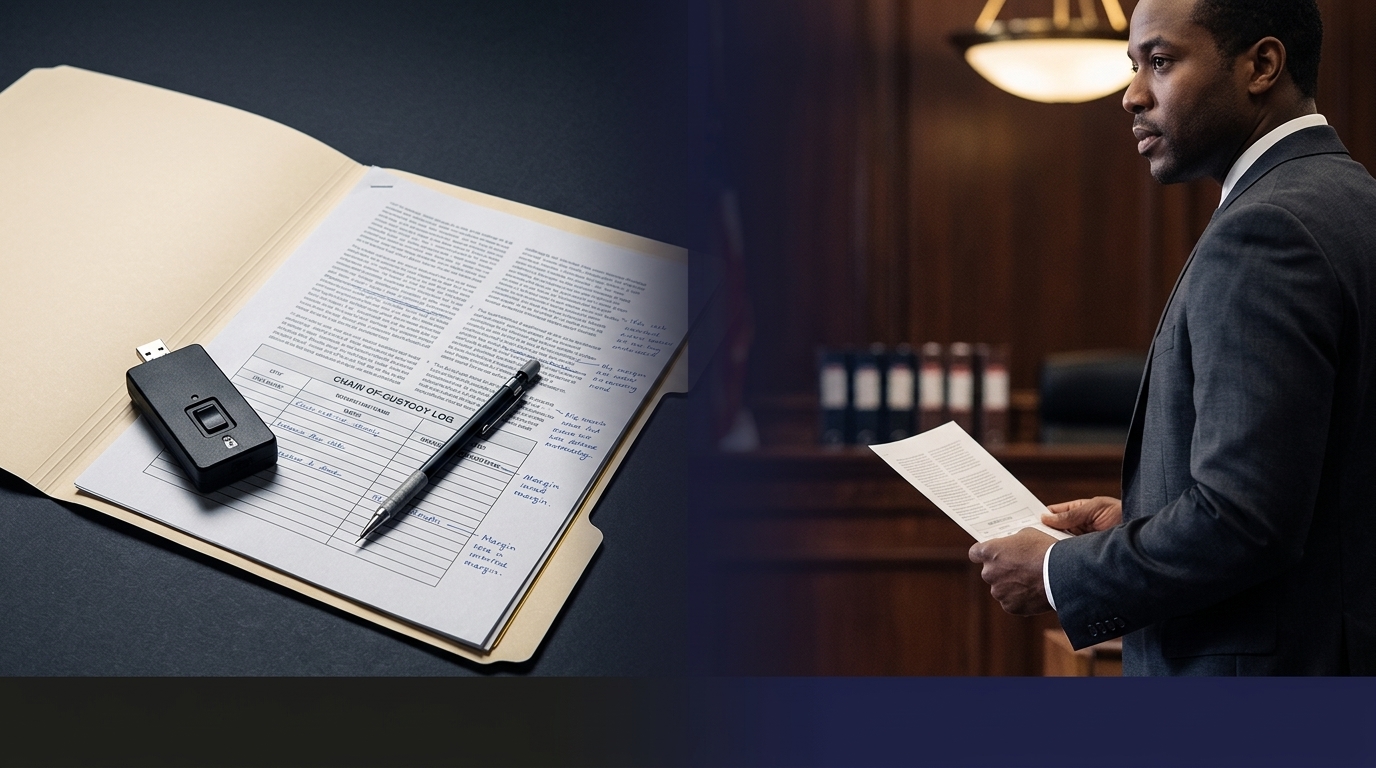
You need to implement robust evidence preservation strategies. This means using sterile media for storage and applying tamper-evident sealing techniques. Additionally, maintaining a precise custody transfer log is essential. By following these strategies, you keep your evidence intact and defensible.
Chain of Custody Management
Managing the chain of custody is vital. Every movement of the evidence must be documented meticulously to prevent any questions regarding its integrity. This documentation ensures transparency and accountability throughout the evidence lifecycle. If any part of the chain is broken, the evidence could be questioned in court.
Documentation Standards for Legal Hold
Adhering to documentation standards for legal hold is crucial. This involves maintaining detailed acquisition logs and investigative reporting. Such documentation not only supports legal compliance but also enhances the credibility of your evidence in the legal arena.
Forensic Evidence Lifecycle
Understanding the forensic evidence lifecycle helps in creating a process that moves seamlessly from collection to courtroom presentation.
Defensible Collection Process
A defensible collection process is critical for maintaining evidence integrity. This involves using a forensic methodology that includes collecting data without altering it. By doing so, you protect the evidence from potential disputes during legal proceedings.
Forensic Imaging and Metadata Integrity
Forensic imaging captures an exact copy of the digital evidence, preserving its original state. Ensuring metadata integrity is part of this process, as it provides context and authenticity to the evidence. Tools like cryptographic hashing can help maintain this integrity.
Expert Witness Testimony and Validation
Expert witness testimony can strengthen your case by validating the evidence and the process used to gather it. An expert can explain technical details in a way that is understandable to a court. Their role is not just to present evidence but to demonstrate its reliability and relevance to the case.
Frequently Asked Questions
What is a write-blocker used for in digital forensics? A write-blocker is a tool that prevents any alterations to digital evidence during collection. It ensures that the data remains unchanged, which is crucial for preserving its integrity.
Why is chain of custody important in digital forensics? Chain of custody is essential because it tracks every movement and transfer of evidence. This documentation ensures that the evidence has not been tampered with and is critical for its admissibility in court.
How does cryptographic hashing enhance evidence integrity? Cryptographic hashing creates a unique digital fingerprint for each file. This process detects any changes and maintains the original state of the evidence, enhancing its integrity and credibility.


Comments