Secure First, Defend in Court: Forensic Collection, Preservation, Documentation

Digital evidence often breaks down when collection and preservation falter—leaving attorneys exposed long before the courtroom battle begins. You need more than just secure data; you need proof that holds up when challenged under scrutiny. At Alethean Group, our forensic discipline turns fragile digital traces into courtroom-ready documentation, ensuring your evidence stays solid from collection through expert testimony. For further insights, you can read more about how digital evidence is preserved.
The Evidence Lifecycle
Navigating the path from digital chaos to courtroom clarity begins with understanding how evidence travels through its lifecycle. Alethean Group ensures this path is both secure and legally defensible.
Scoping and Legal Hold Alignment
The journey begins with setting the stage right. Scoping involves identifying what data is necessary for your case. This is where legal hold comes into play, ensuring that data isn't altered or lost. It prevents spoliation and strengthens the case. Legal hold is more than a directive—it’s a shield that protects digital evidence. Skipping this step can leave gaps in your defense.
In a typical scenario, you might be faced with a mountain of data. The key is to narrow it down with precision. Think of it as tuning into the right frequency amid static. By doing this, you preserve the integrity of your evidence and your argument.
Forensic Collection and Imaging
Once scoped, the next step is to capture the evidence accurately. Forensic collection ensures data is gathered without alteration. Imaging creates an exact copy of digital content. It’s like having a backup you can trust. This process is crucial to maintaining the original's integrity.
Imagine you’re in a high-stakes poker game, but the deck is fair and transparent. Forensic imaging does precisely that—it keeps everything above board. With data safely imaged, you can move forward knowing your evidence is as solid as the original.
Metadata Preservation and Hash Verification
Metadata serves as the fingerprint of digital files. Preserving it is crucial, as it tells the story of your evidence—where it’s been, and how it’s changed. Hash verification adds another layer, ensuring what you have is untampered. It’s like sealing an envelope with a wax stamp.
Hash values act as unique identifiers, ensuring the authenticity of your data. Without them, you’re at the mercy of doubt. When presenting evidence, knowing it’s untouched gives you the confidence to argue your case effectively.
Secure Handling Practices
With evidence collected, the focus shifts to how you handle it. The integrity of your case depends on secure practices and meticulous documentation.
Write Blocking and Integrity Verification
Write blockers protect your data from being altered during analysis. This tool acts like a one-way street, allowing reading but blocking any changes. It’s a safeguard for the integrity of your evidence.
Imagine trying to keep a jar of honey from spilling. Write blocking is the lid that ensures nothing gets in or out. By preventing alterations, you maintain a clean slate for your analysis.
Chain of Custody Maintenance
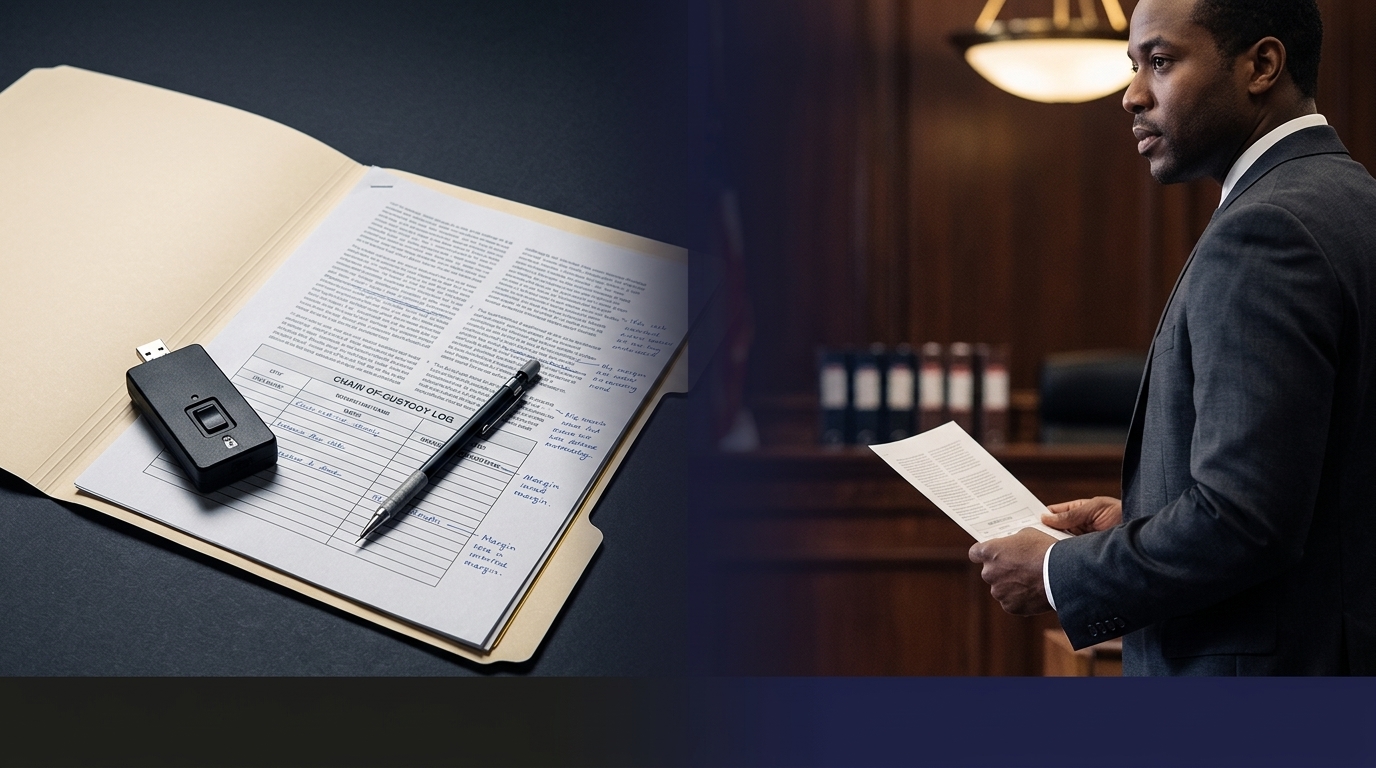
A seamless chain of custody is like a relay race baton—never dropped, always tracked. It documents every hand that the evidence passes through, ensuring transparency. Each entry builds trust in your evidence’s journey.
This meticulous tracking is what makes your evidence credible. Without it, even the strongest evidence could be questioned. Maintaining a robust chain of custody anchors your case in reliability.
Spoliation Prevention Techniques
Preventing spoliation is about more than just rules. It’s about anticipation and preparation. Ensuring evidence remains unspoiled is essential for courtroom readiness. Techniques like proper storage and handling mitigate risks.
Think of it as weatherproofing your house. You prepare for storms before they hit, securing your foundation. By employing these techniques, you protect your evidence from unforeseen challenges.
Courtroom-Ready Documentation
As the evidence journey nears its end, it’s time to focus on making it courtroom-ready. Documentation is your narrative that speaks for itself.
Preparing for Expert Witness Testimony
An expert witness turns data into a story juries can understand. Their testimony is crucial. Preparing evidence for them involves clarity and organization. It’s like setting a stage for a play, ensuring every prop is in place.
Without proper preparation, even the most skilled expert can stumble. By organizing your evidence, you empower them to present a compelling narrative that stands up to scrutiny.
Audit Trails for Cross-Examination
Audit trails act as a roadmap of your evidence’s history. They provide transparency and bolster credibility during cross-examinations. Every action is logged, providing a clear picture of the evidence lifecycle.
Consider it like a detailed logbook for a ship. Every port call, every change in course is recorded, leaving no room for doubt. This transparency is vital when your evidence is under fire.
Data Recovery and Preservation Authenticity
Lastly, ensure your data recovery process is sound. Preservation authenticity means recovered data remains true to its original state. It’s about maintaining integrity throughout the recovery process.
Imagine restoring a classic painting. The goal is to return it to its original glory, not alter its essence. Authentic data recovery retains the original’s integrity, making it courtroom-ready.
Frequently Asked Questions
What is legal hold and why is it important?
Legal hold ensures that data is preserved for legal review and litigation. It prevents data from being altered or destroyed, maintaining evidence integrity crucial for legal proceedings.
How does metadata preservation help in legal cases?
Metadata acts as the digital fingerprint of a file, providing details like creation date and modifications. Preserving this information helps establish the authenticity and history of digital evidence.
Why is a chain of custody important in handling digital evidence?
A documented chain of custody tracks every person who handled the evidence, ensuring its integrity and credibility. It’s crucial for establishing that the evidence remains untampered throughout its lifecycle.


Comments