Defensible Digital Forensics: Repeatable Methods, Transparent Records, Clear Court Explanations

Digital forensics defensibility does not happen by accident. When you prepare evidence late in the game, gaps in documentation and unclear methods often cause challenges. The strongest cases start now, with forensic steps that repeat reliably, records that clearly show chain of custody, and explanations a court can follow without confusion. This post will show you how early action builds a defensible process—not a last-minute scramble. For more insights, visit our website.
The Foundation of Digital Forensics Defensibility
Digital forensics defensibility begins with a solid foundation. You need repeatable methods, clear documentation, and court-ready explanations to ensure evidence holds up under scrutiny.
Importance of Repeatable Forensic Methods
Repeatable forensic methods form the backbone of defensible digital evidence. They ensure that each step in the forensic process can be duplicated, reducing the chances of errors. When your forensic methods are repeatable, you can confidently demonstrate to the court that your process is reliable. This consistency is vital when facing legal challenges.
To achieve repeatability, rely on established protocols and tools that guide your forensic investigations step by step. Use techniques that have been tested and proven effective in various scenarios. Regular training for your team on these methods also helps maintain consistency. Ultimately, repeatable methods mean that you can produce the same results under the same conditions, which is crucial for credibility.
Transparent Documentation Processes
Transparent documentation is your ally in building a defensible process. It involves keeping clear and accessible records of every action taken during the forensic investigation. This includes everything from data collection to analysis, ensuring that nothing is left undocumented. Transparent documentation allows you to show the court a complete and accurate picture of your investigative steps.
Maintaining transparency in documentation starts with using standardized templates and logs. These tools help you record details consistently. Ensure that all team members understand the importance of thorough documentation and encourage them to note even the smallest actions. By doing so, you create a clear trail that can be followed by others, including legal professionals.
Clear Court Explanations
Clear court explanations are essential in making digital evidence defensible. When presenting your findings, you must communicate them in a way that is## The Foundation of Digital Forensics Defensibility
Creating a defensible digital forensics process requires a structured approach. By ensuring methods are repeatable and documentation is clear, you can build trust in your findings.
Importance of Repeatable Forensic Methods
Repeatability is crucial in digital forensics. It ensures that any expert following the same steps will reach the same conclusions. This predictability is the backbone of defensibility. When methods are consistent, you minimize room for error and bias. Imagine working on a high-stakes case. You need assurance that your analysis will hold up under scrutiny. By using established procedures, you enhance credibility.
Moreover, having repeatable methods means your team can work efficiently. Consistency breeds confidence, allowing you to focus on complex aspects of the case. When everyone knows the protocol, collaboration becomes seamless. This unity strengthens your position, whether in negotiations or court.
Transparent Documentation Processes
Clear documentation is key to supporting your forensic findings. Every step you take in an investigation should be recorded in detail. This transparency helps others understand and trust your work. When you document thoroughly, you provide a roadmap that others can follow. This clarity is especially important if questions arise later.
Think of documentation as a safety net. It protects your credibility and the integrity of your evidence. A well-documented process shows diligence and care. It reassures clients and courts alike that your conclusions are based on solid ground.
Clear Court Explanations
Communicating complex forensic findings to a non-technical audience is challenging. Simplifying your explanations without losing essential details is vital. When presenting in court, your goal is to make sure everyone, from judges to jurors, understands your points. You need to break down technical jargon into plain language. This clarity can make or break a case.
Imagine trying to explain a complex network analysis. Breaking it down into simple terms ensures your audience follows along. By doing this, you build a bridge between technical complexity and legal reasoning, strengthening your defense.
Key Components of a Defensible Process
The essential elements in digital forensics provide a solid framework for building defensibility. Each step reinforces the integrity and trustworthiness of your findings.
Chain of Custody and Hash Verification
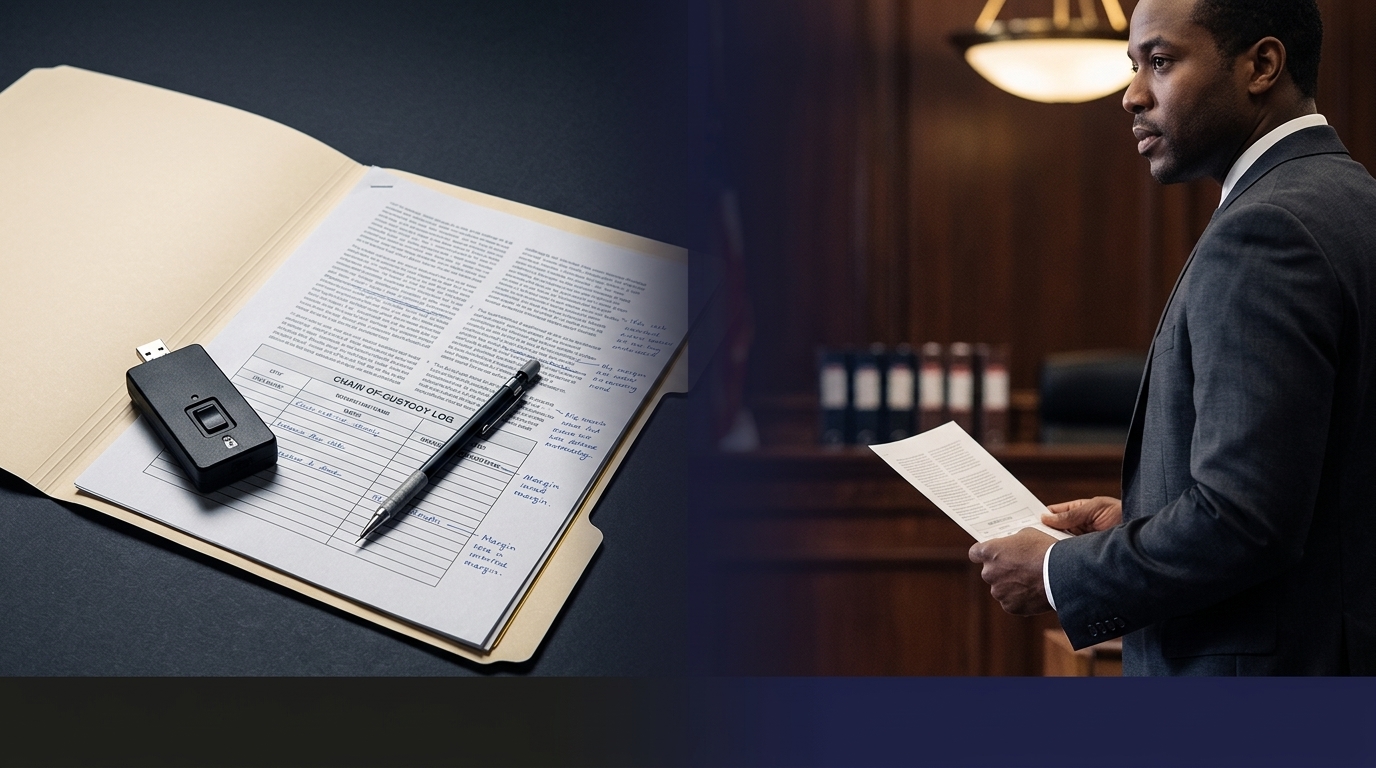
Maintaining a clear chain of custody is critical. It shows the path evidence has taken from collection to analysis. This transparency helps prevent tampering or mishandling allegations. Documenting who has handled evidence and when is part of this process. In addition, hash verification ensures data integrity. By creating a unique identifier, you can prove that evidence remains unchanged throughout the investigation.
Together, these practices protect evidence from being discredited. They provide a robust foundation for your case, ensuring that your findings are above reproach.
Metadata Preservation and Forensic Imaging
Preserving metadata is essential for understanding context. Metadata can tell you when a file was created, modified, or accessed. This information often plays a crucial role in investigations. Forensic imaging captures a complete snapshot of a device's data. This process allows you to analyze without altering the original evidence.
By preserving metadata and creating forensic images, you create a detailed and accurate picture of the evidence. This thoroughness supports your findings and enhances their credibility.
Expert Witness Testimony and Standards
Having an expert witness is invaluable in digital forensics. Their testimony can clarify complex procedures and validate your methods. Experts bring years of experience and knowledge to the table. Their insights help courts understand the significance of your findings.
Familiarity with standards like the Daubert challenge and Frye standard is crucial. These benchmarks guide the admissibility of evidence in court. An expert who understands these standards can provide strong, persuasive testimony. This expertise is a powerful tool in defending your case.
Building Confidence in Digital Evidence
Confidence in digital evidence stems from early and thorough preparation. By starting your assessment early, you set the stage for success.
Early Case Assessment and eDiscovery
Getting a head start on case assessment can make a significant difference. Early evaluation allows you to identify key evidence and potential challenges. This proactive approach helps you prepare for eDiscovery, ensuring that you capture all necessary data.
Starting early also means you have time to refine your strategy. You can adapt to new information and make adjustments before deadlines loom. This readiness gives you a strategic edge, whether in negotiation or litigation.
Forensic Report and Litigation Readiness
A well-prepared forensic report is a cornerstone of litigation readiness. It presents your findings in a clear, organized manner. This report serves as a comprehensive guide for legal teams, outlining the evidence and its implications.
By ensuring your report is thorough and precise, you strengthen your case. It allows your legal team to craft compelling arguments based on solid evidence. This preparation is vital for any successful litigation strategy.
Engaging in Regulatory Investigations
Regulatory investigations demand careful handling of digital evidence. Compliance with standards and regulations is a must. By engaging proactively, you demonstrate your commitment to transparency and integrity.
Working closely with regulatory bodies ensures you meet all requirements. This collaboration minimizes risks and builds trust in your process. It shows that your findings are reliable and defensible, even under the closest scrutiny.
Frequently Asked Questions
What makes digital forensics defensible?
Digital forensics becomes defensible through repeatable methods, clear documentation, and concise court explanations. These elements ensure evidence withstands scrutiny and maintains its integrity.
Why is chain of custody important?
The chain of custody tracks the handling of evidence from collection to analysis. It prevents tampering and ensures that evidence is authentic and reliable in court.
How do you prepare a forensic report?
A forensic report should be accurate, detailed, and organized. It must clearly present findings and their implications, serving as a guide for legal teams during litigation.
What role does metadata play in investigations?
Metadata provides crucial context, revealing details like creation and modification dates. It helps investigators understand the timeline and significance of digital evidence.
Why engage early in regulatory investigations?
Engaging early helps demonstrate transparency and compliance. It allows you to address potential issues proactively, building trust with regulatory bodies.


Comments