Admissibility Begins at First Touch: Document Metadata, Scope, and Chain of Custody

Many legal teams feel a quiet unease when digital evidence arrives already handled. That first touch can create gaps in metadata preservation, scope control, or chain of custody—gaps that later threaten admissibility. Documenting these details from the outset turns uncertainty into courtroom readiness, making your evidence defensible every step of the way. Here’s why your first move with digital forensics matters as much as the final report. Learn more about managing digital evidence.
Admissibility Begins with First Touch
Preserving Metadata Integrity
Your first action with digital evidence can set the stage for success or failure. Preserving metadata is crucial. Metadata includes essential details like the creation date, author, and modification history. It acts as the digital fingerprint of a file. Maintaining this integrity ensures that you have a reliable record of where and how the evidence has been handled. When you preserve metadata, you prevent critical information from being altered or lost. It's like keeping an evidence bag sealed until court. This step supports admissibility because the data remains in its original state, making it easier to authenticate and defend in court.
Scope Limitation Strategies
Limiting the scope of evidence collection is equally important. It helps focus your efforts and minimizes the risk of over-collection, which can complicate the legal process. By clearly defining the scope, you ensure that only relevant data is collected. This approach reduces unnecessary data handling and potential exposure to privacy breaches. When you set boundaries, it streamlines the process, making it more manageable for your legal team. Limiting scope also protects against claims of intrusion or overreach, which can be detrimental in legal proceedings.
Chain of Custody Essentials
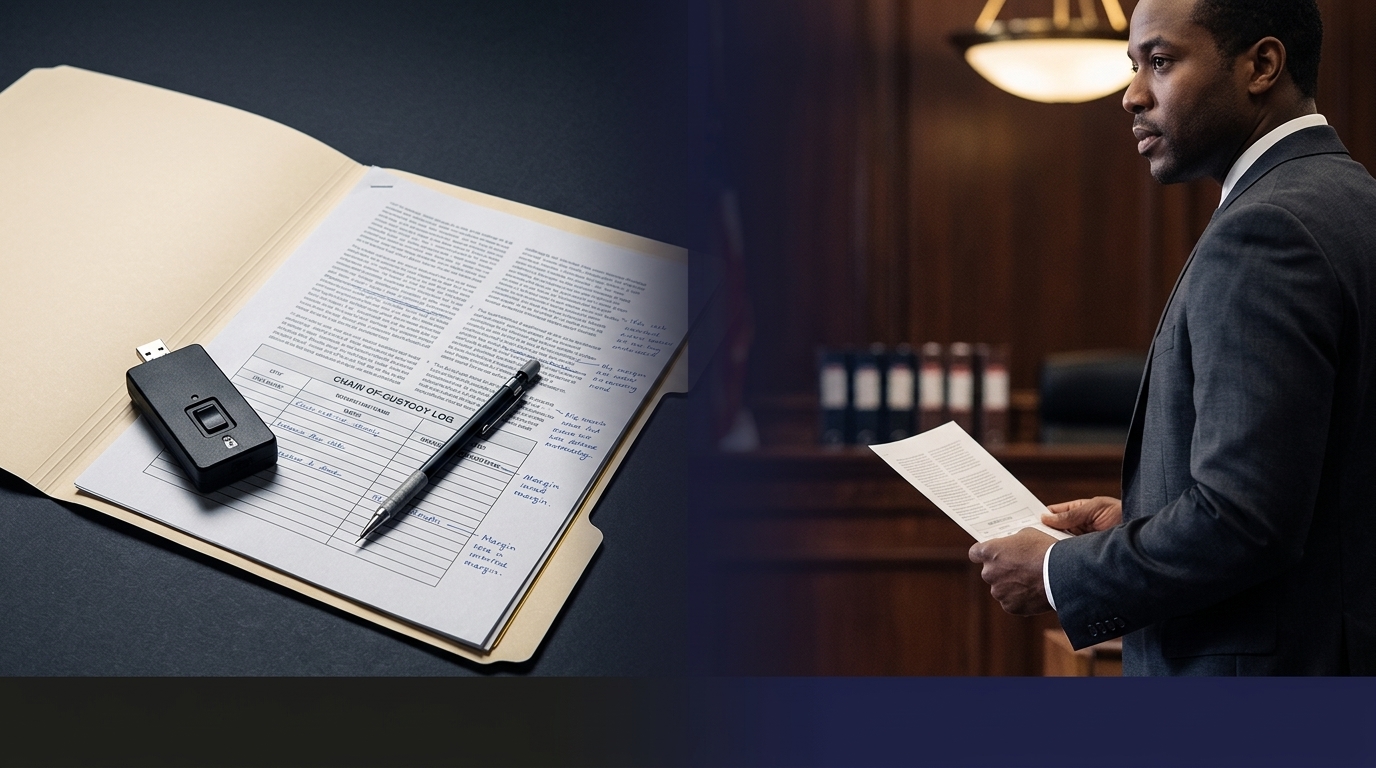
A well-documented chain of custody is vital to maintaining evidence integrity. It records every transfer and handling of evidence, creating a complete history from collection to courtroom. This documentation shows who has accessed the evidence and when. Maintaining a clear chain of custody prevents evidence tampering and supports its authenticity. It's like a trust-building exercise, assuring the court that the evidence is unaltered. Proper documentation at each step ensures your evidence is defensible, as every change in custody is accounted for,## Admissibility Begins with First Touch
Preserving Metadata Integrity
Metadata integrity is crucial in legal cases. It acts as the fingerprint of your digital evidence, ensuring authenticity and reliability. Your first task is to protect this information.
When you preserve metadata from the start, you lock in critical details like timestamps and document origins. This means that, come trial time, you have unrefuted proof of authenticity. Without this, evidence can be questioned or dismissed. Make sure every digital item has its metadata intact and documented, turning potential pitfalls into strengths.
Consider real-life scenarios where cases fell apart due to altered metadata. Don't let your case be next. Start your evidence journey right by securing metadata integrity.
Scope Limitation Strategies
Limiting the scope early prevents overwhelming data volumes. This means fewer resources spent and more relevant findings. Begin by defining what you need from the evidence and stay focused.
When you clearly outline the search criteria, you target only the pertinent information. This approach not only saves time but also strengthens your case. Broad searches can lead to irrelevant data that complicates the legal process. Instead, streamline your efforts for efficient results.
Imagine sifting through mountains of data only to find a fraction useful. Avoid this by setting clear boundaries from the outset. Focus on specifics to drive your case forward efficiently.
Chain of Custody Essentials
Chain of custody ensures evidence remains credible. Each transfer must be logged and signed, providing a trail from collection to courtroom.
A well-maintained custody log safeguards against claims of tampering. Every handoff is documented, making the evidence journey transparent. This transparency builds trust in the evidence's integrity, critical in legal disputes.
Without a clear chain, evidence can be contested. Avoid this by maintaining precise records. A solid chain of custody will support your evidence under scrutiny. Explore best practices for digital evidence.
From Collection to Courtroom
Forensic Imaging and Hash Values
Forensic imaging is your evidence snapshot. It captures the data, preserving it in its original form. Complementing this with hash values ensures the image's integrity.
Hash values act like digital fingerprints, confirming that data hasn't changed. If even a tiny bit of data is altered, the hash value will differ, signaling a breach in integrity. Regularly checking these values reassures you that the evidence remains intact.
Consider hash values your verification tool. They provide undeniable proof that the evidence stands untampered, solidifying its courtroom readiness. Discover more about safeguarding digital evidence.
Maintaining Evidence Integrity
Evidence integrity is paramount. From collection to presentation, maintaining this integrity requires vigilance and expertise.
Every step in the evidence chain must prioritize preservation. This means using write-blocked acquisition and secure storage. Such measures prevent alteration, keeping the evidence pristine for legal scrutiny.
Understand that maintaining integrity is an ongoing process. It requires a disciplined approach and constant checks to ensure that evidence remains untainted and reliable.
Preparing for Courtroom Readiness
Courtroom readiness starts with proactive planning. It involves ensuring every piece of evidence is prepared for legal examination.
This preparation includes verifying all documentation, rehearsing testimony, and confirming evidence handling procedures. The goal is to present a seamless narrative that holds up under questioning.
By focusing on courtroom readiness from the beginning, you build a stronger case. It’s about having confidence that your evidence will withstand the toughest scrutiny. Read about legal proceedings in digital forensics.
Leveraging First-Move Expertise
Tailored E-Discovery Support
E-discovery support should be customized. Tailored solutions meet your unique needs and enhance your case's strength.
A one-size-fits-all approach is less effective. Instead, seek services that adapt to your requirements, ensuring every piece of evidence aligns with your legal strategy. This customization can be the difference in complex cases.
Leverage e-discovery specialists who understand your case intricacies. Their expertise will guide you through the process, making your evidence collection efficient and focused.
Ensuring Legal Defensibility
Legal defensibility is about presenting evidence that stands firm. It means every piece is ready to face legal challenges without faltering.
Achieving this involves thorough documentation and adherence to legal standards. Evidence must be collected and maintained following strict protocols. This ensures it can be defended robustly in court.
Prioritize defensibility from the start. It's your shield against evidence disputes, giving you confidence in your legal journey.
Empowering Litigation Teams
Empowering your team is crucial. With the right tools and knowledge, they can handle digital evidence confidently.
Training and resources are essential. Equip your team with the latest in digital forensics and e-discovery tactics. A well-prepared team can adapt to challenges and pivot strategies as needed.
Empowerment leads to readiness. Your team will be prepared to defend evidence, address disputes, and leverage digital insights effectively.
Frequently Asked Questions
How do you preserve metadata integrity? Metadata integrity is preserved by documenting and protecting digital evidence from the moment of collection. This involves using secure systems that prevent any unauthorized changes, ensuring the metadata remains unchanged and authentic throughout the evidence handling process.
What is the importance of chain of custody in legal cases? Chain of custody is crucial as it provides a documented history of the evidence's handling. This documentation is essential to prove the evidence has not been tampered with, maintaining its integrity and admissibility in court.
How can forensic imaging support legal cases? Forensic imaging creates an exact copy of digital evidence, preserving its original state. This process ensures that any analysis is conducted on the copy, keeping the original evidence untouched and intact, which is vital for legal proceedings.
Why is scope limitation important in evidence collection? Limiting the scope prevents the collection of excessive irrelevant data, focusing on pertinent information. This not only saves time and resources but also strengthens the legal strategy by ensuring all collected data is directly relevant to the case.
What role does tailored e-discovery support play? Tailored e-discovery support ensures that the evidence collection process is aligned with the specific needs of a case, enhancing the legal strategy's effectiveness. Customized support adapts to the unique challenges of each case, making the evidence more defensible in court.


Comments