Preserve Metadata, Context, and Handling Records to Keep Digital Evidence Trusted

Digital evidence often faces challenges beyond its technical accuracy. Missing metadata, unclear context, or gaps in handling records can weaken its credibility in court and audits. You need clear proof showing how evidence was collected and preserved to stand strong under scrutiny. This post will guide you through preserving metadata, context, and the chain of custody to ensure your digital evidence remains trustworthy and defensible. For more insights, you may refer to this guide on digital chain of custody.
Importance of Metadata Preservation
Metadata preservation is crucial in maintaining the integrity of digital evidence. Without it, even the most accurate evidence could be discredited in court.
Key Role in Digital Forensics
Metadata plays a pivotal role in digital forensics. It provides essential details about the evidence, such as who created it, when it was last modified, and how it was handled. These data points are vital for proving the authenticity and integrity of evidence. In digital forensics, metadata acts as a fingerprint, ensuring every piece of evidence can be traced back to its origin. By maintaining accurate metadata, you create a robust trail that can stand up to scrutiny. This is particularly important in legal contexts, where every detail counts.
Impact on Courtroom Admissibility
The courtroom is where evidence faces the highest scrutiny. Here, metadata becomes your strongest ally. It can make or break the admissibility of digital evidence. When metadata is intact, it serves as proof that the evidence has not been tampered with. This increases the chances of the evidence being accepted in court. On the other hand, missing or altered metadata can lead to doubts about the evidence's authenticity. Therefore, preserving metadata is not just beneficial; it is essential for courtroom success.
Avoiding Spoliation with Metadata
Spoliation refers to the alteration or destruction of evidence, and it can have dire consequences in legal proceedings. Metadata preservation helps prevent spoliation by documenting the evidence's entire lifecycle. When metadata is preserved, you have a clear record of who accessed the evidence and when. This transparency can protect you from accusations of evidence tampering. By focusing on metadata preservation, you can ensure that your evidence remains credible and defensible, avoiding costly legal setbacks.
Understanding Context Preservation
Preserving context is equally as important as preserving metadata. Without context, evidence can be misunderstood, leading to incorrect conclusions.
Contextual Integrity in Evidence
Contextual integrity ensures that digital evidence is understood in its entirety. It involves maintaining the surrounding information that gives evidence its meaning. For instance, a single email might seem innocuous, but when viewed alongside related emails, it could reveal a significant pattern. By preserving context, you provide a fuller picture of the evidence, enhancing its value in legal proceedings. Contextual integrity is about ensuring that evidence retains its intended meaning and does not lose significance over time.
Challenges of Missing Context
Missing context can lead to misunderstandings and misinterpretations of evidence. When evidence is taken out of context, its meaning can change entirely. This can result in incorrect conclusions being drawn, which can be detrimental in legal cases. To avoid these pitfalls, it's crucial to preserve the context of digital evidence. This involves documenting not only the evidence itself but also the circumstances surrounding it. By doing so, you ensure that the evidence is viewed accurately and fairly.
Enhancing Provenance and Authentication
Provenance and authentication are critical components of context preservation. They ensure that evidence can be traced back to its origin and verified as authentic. By maintaining accurate records of how evidence was collected and handled, you enhance its credibility. This is particularly important in legal settings, where the authenticity of evidence is often challenged. By focusing on provenance and authentication, you strengthen the evidentiary value of your digital evidence, making it more persuasive and reliable.
Handling Records for Chain of Custody
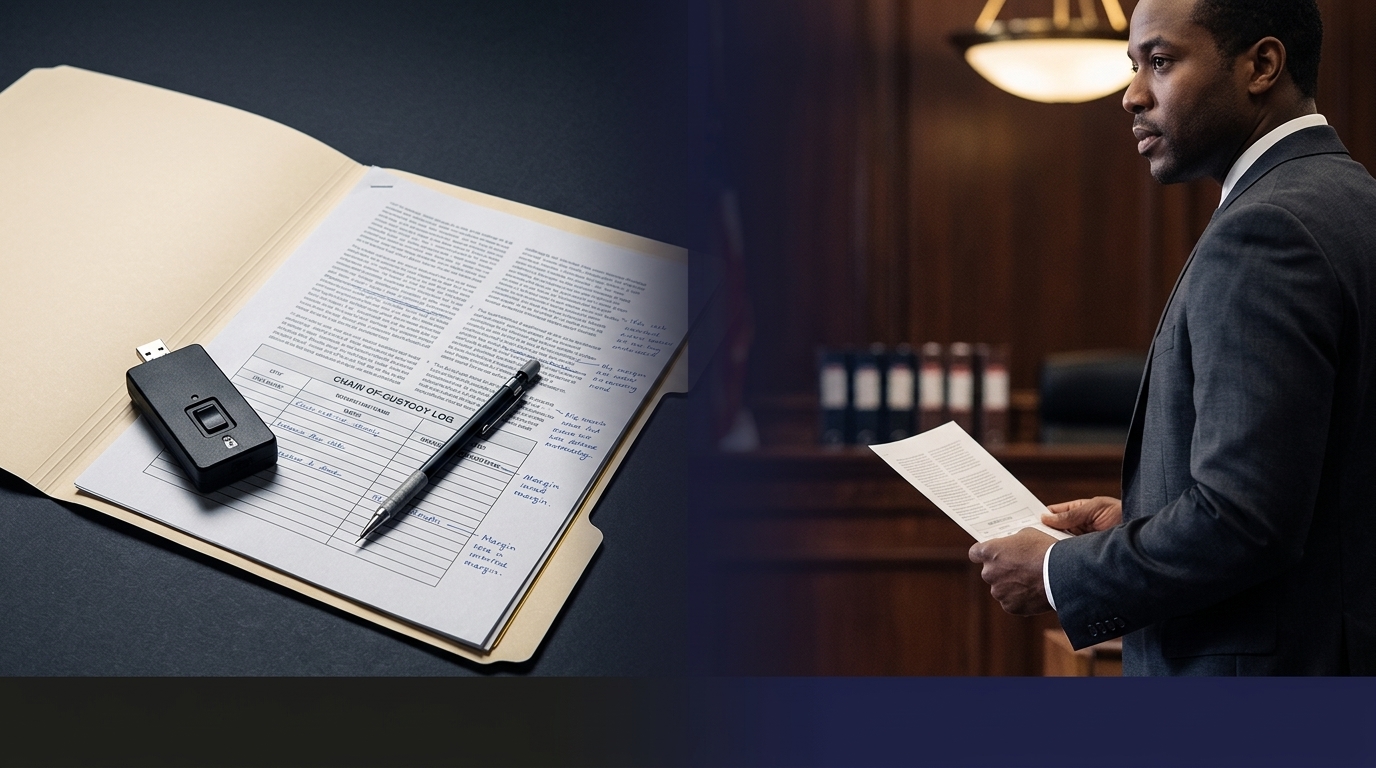
The chain of custody is a fundamental aspect of evidence handling. It tracks the evidence's journey from collection to presentation in court.
Ensuring Evidentiary Integrity
Maintaining the chain of custody is crucial for ensuring evidentiary integrity. It provides a detailed record of who has handled the evidence and when, preventing any unauthorized access or tampering. By documenting every step of the evidence's journey, you create a transparent trail that can withstand scrutiny. This is vital for maintaining trust in the evidence and ensuring it remains credible throughout the legal process.
Best Practices for Custody Logs
Custody logs play a crucial role in maintaining the chain of custody. They document every transfer of evidence, providing a clear record of its history. To ensure accuracy, it's important to follow best practices when maintaining custody logs. This includes recording the date and time of each transfer, the names of individuals involved, and the condition of the evidence. By adhering to these practices, you create a reliable record that can support the integrity of the evidence in court.
Forensic Collection and Audit Readiness
Forensic collection is the first step in ensuring that digital evidence is ready for audit and court presentation. It involves collecting evidence in a way that preserves its integrity and authenticity. By focusing on forensic collection, you prepare the evidence for potential audits and legal challenges. This involves using standardized processes and tools to collect and preserve evidence, ensuring it remains unaltered. With forensic collection, you enhance the readiness of your evidence, making it more defensible in legal settings.
Frequently Asked Questions
What is metadata preservation in digital forensics?
Metadata preservation involves maintaining the data that describes the digital evidence, such as its origin, authorship, and modification history. This is crucial for proving authenticity and integrity in legal contexts.
Why is the chain of custody important for digital evidence?
The chain of custody tracks who has handled the evidence and when, ensuring that it remains untampered with. This is essential for maintaining trust and credibility in legal proceedings.
How does context preservation enhance digital evidence?
Preserving context ensures that evidence is understood in its entirety, preventing misinterpretations. It involves maintaining the information surrounding the evidence, which can be critical for accurate legal conclusions.


Comments