Preserve Metadata, Context, and Handling Records to Keep Digital Evidence Trusted

Digital evidence doesn’t prove its worth in the courtroom—it proves it long before, through preserved metadata, context, and chain of handling. Too often, evidence arrives without the records that show how it was collected and maintained, leaving its integrity in question. This summer, take the time to close that preservation gap and gain confidence that your digital evidence will hold up under scrutiny. Read on to learn what must be documented at every step to protect your case’s credibility. For more insights, explore this resource.
Importance of Metadata Preservation
Understanding the importance of metadata is crucial for maintaining digital evidence credibility. Metadata acts as the unseen backbone of any digital file, providing insight into its origin and authenticity.
Understanding Metadata in Digital Forensics
Metadata is the digital fingerprint of your data. It records when a file was created, modified, or accessed, which is vital during investigations. Forensic experts rely on metadata to verify evidence authenticity, ensuring that what you have is both accurate and reliable. Without it, proving the integrity of your evidence becomes challenging, making it susceptible to scrutiny in court. For a deeper dive into preserving digital evidence, check out this guide.
Risks of Metadata Loss
Losing metadata is like discarding a map that shows how to navigate your evidence's history. Without it, digital files become questionable, and their reliability diminishes. This loss can occur through improper handling or inadequate preservation methods, leaving room for doubt. Ensuring metadata integrity is essential, as it's the foundation of credible digital evidence, supporting your case's strength.
Ensuring Evidence Integrity
Maintaining evidence integrity means more than just careful handling; it involves a meticulous chain of custody and secure storage practices that underpin every legal outcome.
Critical Role of Chain of Custody
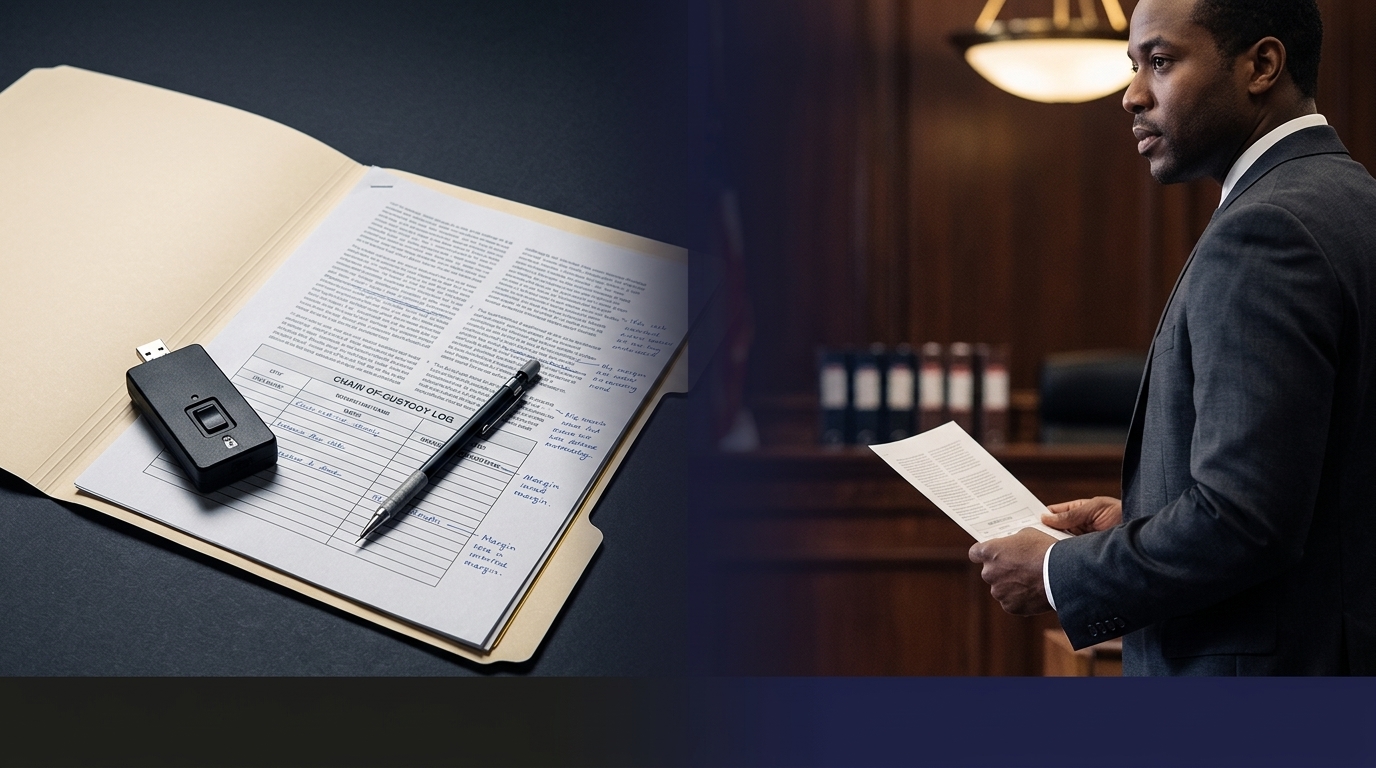
The chain of custody is your evidence's lifeline, detailing every hand it passes through. It ensures that what you present in court is unchanged from its original state. Maintaining a clear and uninterrupted chain is non-negotiable. Each transfer must be documented, proving the evidence remains untampered. This practice is not just a formality; it's a cornerstone of legal admissibility. Learn more about best practices here.
Secure Evidence Storage Practices
Secure storage means safeguarding your evidence from unauthorized access and environmental threats. Proper storage isn't just about locking files away; it's about creating conditions that prevent degradation or corruption. Use controlled environments and encrypted storage solutions to protect your digital assets. This approach not only preserves the evidence but also upholds its authenticity.
Documenting the Chain of Handling
A robust chain of handling is essential for demonstrating evidence integrity, requiring effective logging and audit practices.
Effective Access Logging Strategies
Access logging is like having a security camera on your evidence. It tracks who accesses files and when ensuring transparency in handling. Implementing comprehensive logging strategies means every interaction with the evidence is recorded, providing a complete trail. This practice strengthens your case by showing due diligence and accountability.
Maintaining Audit Defensibility
Audit defensibility is about being prepared for scrutiny. It involves documenting every step in your evidence's journey, from collection to presentation. By maintaining thorough records, you can respond confidently to any challenges about your evidence's integrity. This reassurance comes from a commitment to transparency and meticulous documentation, key elements in building a credible case.
Frequently Asked Questions
What is metadata in digital forensics?
Metadata is additional information about your digital files, detailing when they were created, modified, or accessed. It serves as proof of a file's authenticity, crucial for verifying evidence integrity in legal proceedings.
Why is the chain of custody important?
The chain of custody ensures that digital evidence remains untampered from collection to court presentation. Documenting each transfer establishes a clear, unbroken trail, essential for maintaining the evidence's credibility.
How can I secure my digital evidence?
Secure your digital evidence by storing it in controlled environments and using encryption to prevent unauthorized access. These practices protect the evidence from degradation and ensure its authenticity.
What are access logging strategies?
Access logging involves tracking who accesses digital evidence and when. It creates a transparent record of interactions, strengthening your case by demonstrating accountability and due diligence.
How does audit defensibility help in court?
Audit defensibility prepares you for scrutiny by maintaining detailed documentation of every step in your evidence's handling. This transparency supports your case by proving the integrity and authenticity of your digital evidence.


Comments