If it has to survive scrutiny, your documentation must match your safeguards

When your documentation faces line-by-line scrutiny, every detail counts. The strength of your digital forensics case hinges on disciplined evidence handling and preservation from the very start. Weak links often show up in the chain of custody or process explanation—not in the technical findings themselves. This post reveals how rigorous forensic documentation supports expert testimony and protects your credibility through every stage of review. For further insights, explore digital forensics for legal teams.
Surviving Scrutiny with Documentation
When every aspect of your documentation might be examined, discipline is key. You want your processes as rigorous as your technical findings. This section focuses on facing detailed reviews with confidence.
Anxiety of Detailed Review
Facing scrutiny can be stressful, especially if every line of a document is examined. You might worry about every link in your chain of custody. But when you follow a systematic process, the anxiety lessens.
Consider a scenario where your team's documentation is under review. The steps you've taken, from collection to analysis, are scrutinized. Any inconsistency could lead to questions. Knowing this, you’ve meticulously tracked all actions, so nothing is left to chance.
Need help navigating this process? Learn about digital forensic experts who can assist.
Assurance Through Clear Process
A clear process builds confidence. When your actions are recorded systematically, it minimizes disputes. Every step, from evidence collection to analysis, should be documented. This transparency is your shield against unnecessary questions.
For instance, maintaining a detailed log helps trace every action accurately. This log becomes your reference in the face of challenges. Moreover, it demonstrates your commitment to accuracy and integrity.
Explore best practices for evidence collection to further enhance your documentation.
Turning Transparency Into Trust
Transparency is not just about clarity; it's your ally in building trust. It shows all parties that your methods are sound. This trust is especially important during legal proceedings.
Imagine presenting your findings in court. The documented steps you took must speak for themselves, leaving no room for doubt. This transparency reassures everyone involved that your conclusions are reliable.
Learn how to write a defensible expert witness report to support your case.
Building a Defensible Case
The foundation of a strong case lies in thorough documentation. From intake to testimony, every step should be meticulously recorded to ensure credibility.
From Intake to Testimony
Your journey from intake to testimony is a path every forensic case must navigate. How you handle this journey defines your case's strength.
Start by logging every piece of evidence as it's collected. This log serves as a timeline and a detailed account of every action taken. As you progress, these records will back your expert testimony, showing the meticulous steps you've followed.
For those seeking resources on digital forensics, Cyberhaven offers essential insights.
Preserving Metadata Integrity
Metadata, the hidden details of your data, is crucial. If mishandled, it can jeopardize your case. Preserving metadata integrity ensures the evidence remains untarnished.
Every time data is accessed, metadata should be protected. It's about maintaining the original state of the data. This integrity is what validates your findings.
When unsure, consult experts on how to maintain metadata integrity in your processes.
Ensuring Chain of Custody
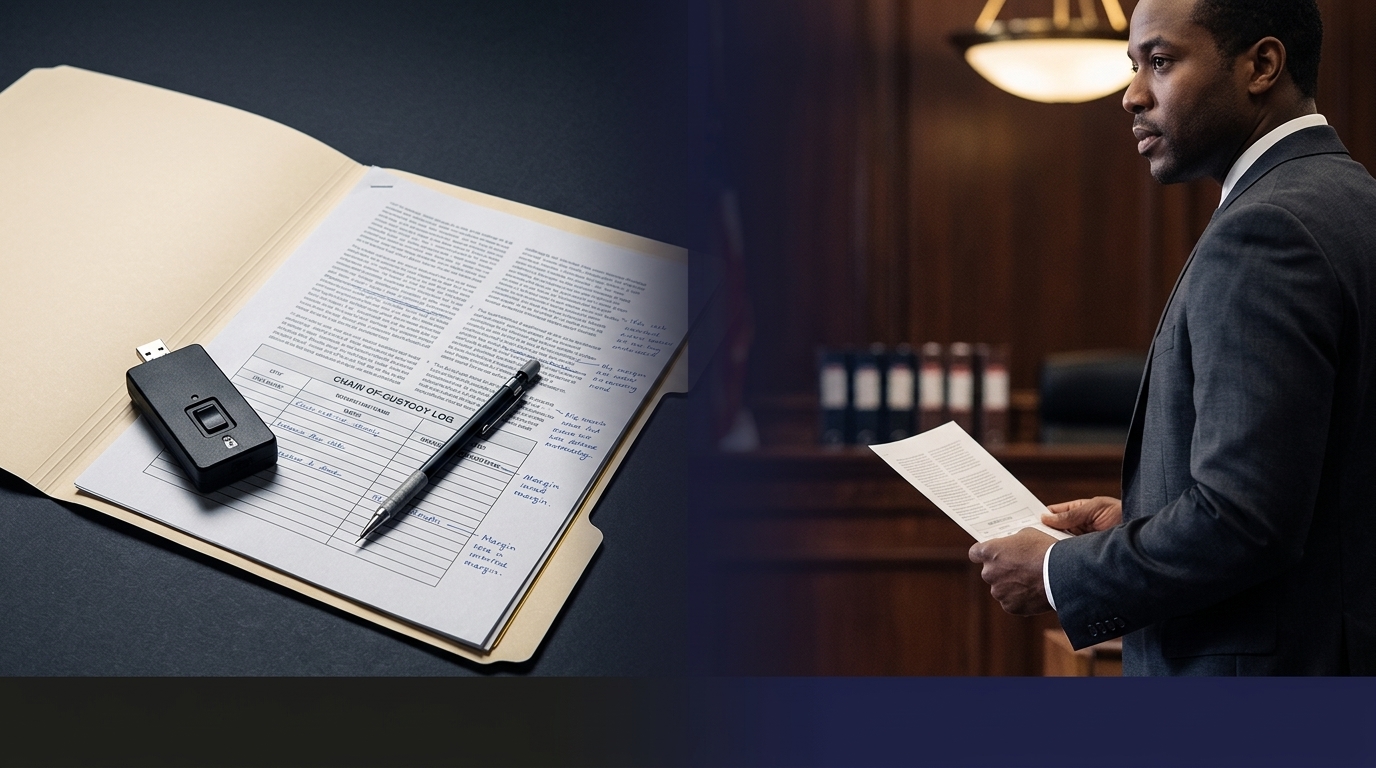
The chain of custody tracks every hand-off of evidence. This record is vital for proving that evidence is untampered.
Consider an instance where your evidence is transferred multiple times. Each transfer should be documented meticulously. This way, you assure everyone involved that the evidence remains unchanged.
For more on maintaining an impeccable chain of custody, visit Forensic Discovery.
Expert Testimony and Credibility
When expert testimony is required, your documentation should align perfectly with demonstratives and explanations.
Aligning Documentation with Demonstratives
Documentation should support visual aids used in expert testimony. Aligning these creates a cohesive narrative for your case.
Imagine presenting in court: your documentation must complement any demonstratives. This alignment makes your case more understandable and credible.
Supporting Plain-Language Explanations
Technical jargon can confuse. When supporting your case, plain-language explanations are key. They make complex processes accessible to everyone.
Craft explanations that are clear and simple. This ensures that anyone, regardless of their expertise, can grasp your findings.
Closeout and Audit Readiness
As your case concludes, being audit-ready is crucial. Your documentation should be thorough, leaving no gaps.
Audit readiness is about anticipating questions and having answers ready. Your documentation should be so complete that it withstands any review.
Frequently Asked Questions
What is digital forensics?
Digital forensics is the process of uncovering and analyzing electronic data for legal purposes. It involves collecting, preserving, and presenting data in a way that is acceptable in a court of law.
Why is the chain of custody important?
The chain of custody is crucial as it documents every transfer of evidence, ensuring it remains untampered. It helps maintain evidence integrity throughout the investigation.
How can I ensure metadata integrity?
To ensure metadata integrity, handle data carefully to preserve its original state. Avoid unnecessary access or modification, and document every action taken with the data.
What makes documentation defensible in court?
Defensible documentation is thorough, clear, and aligns with the processes used to handle evidence. It should demonstrate meticulous tracking and preservation of data integrity.
How does transparency build trust in legal cases?
Transparency in documentation shows that all methods and processes are open to scrutiny. It reassures involved parties that the findings are based on sound practices, building trust.


Comments